


Good lead qualification questions reveal whether you can help and what should happen next. For an inbound service inquiry, start with the requested work, desired outcome, timing, and any requirement that changes fit. Add contact details so your team can reply. Use a sales call to explore the answers that need discussion.
This question bank is for consultants, agencies, and small B2B sales teams. Choose the questions that affect your next step; you do not need all 12 in one form. The examples are original suggestions, not a tested sales script or a promise of more conversions.
Choose lead qualification questions around your offer
Write down what your business can deliver before asking prospects to qualify themselves. Which services do you offer? Which deadlines can you meet? What information would help a person prepare a useful reply?
Salesforce’s qualification guide describes BANT: budget, authority, need, and timeline. These are useful areas to understand, but the guide also notes that the model can be too simple and prospects may not know every answer.
Give uncertainty a useful path. “Budget not agreed yet” may call for a scoping conversation. A requirement your team cannot meet needs a clear service boundary. Treat those as different situations.
Salesforce also distinguishes qualification from lead scoring. A form can collect context for your process. It does not establish a prospect’s purchase intent or become a predictive scoring system just because you assign points.
6 lead qualification questions for an inbound form
Use these when someone requests a service, quote, or consultation. Ask only what you need to route or prepare the reply. Collect a name and reply address separately, and explain what happens after submission.
- Which service would you like help with?
Offer the services you actually provide, plus “I’m not sure” or “Something else” when useful. A short choice can help direct the inquiry to the person who handles that work. Follow an unfamiliar request with a brief description.
- What result would make this project worthwhile?
Use a short text answer to learn the goal. “See weekly revenue by product” gives an analytics consultant something more concrete to discuss than “build a dashboard.” Avoid asking the prospect to write a complete specification.
- What stage are you at with this project?
Adapt choices such as exploring options, defining the scope, or ready to discuss a proposal. Use the answer to prepare the conversation. Someone exploring should receive a relevant next step rather than being treated as ready to sign.
- When would you like the work to be ready?
Let people indicate a target date or flexible timing. If the date changes whether you can help, ask an optional follow-up about the reason for it. A target date is a request to review, not a delivery commitment.
- Has a budget range been agreed for this work?
Ask when budget affects the service you can offer. Use ranges suited to your real offer and include “Not agreed yet.” Explain why you need the information; do not treat a missing number as evidence that the inquiry has no value.
- Is there a requirement we should check before arranging a call?
Give an example relevant to your service, such as an existing data source you must work with. Review unusual requirements with the right specialist. Ask for context here; collect credentials or detailed project materials through your approved onboarding process.
6 lead qualification questions for a sales conversation
Use the submitted context to choose follow-ups. A person can explain a trade-off, correct your understanding, or introduce another participant on a call in a way a required text field cannot.
- What has made this a priority now?
Explore the event or problem behind the inquiry. If the prospect mentions a deadline, ask what depends on it. This can help you distinguish a firm constraint from a date chosen as a starting point.
- How are you handling this today?
Listen for the existing tool or workaround and what it already does well. For the analytics example, a manual spreadsheet may be slow but still contain the reporting rules the new project must preserve.
- What happens if the current approach stays the same?
Let the prospect describe the consequences. Do not supply a cost or revenue-loss figure for them. If an impact matters to the proposal, agree how it could be checked before using it in a business case.
- Who else should help define or review the solution?
Ask about participants, not just a job title. The person requesting a dashboard, the data owner, and the person approving the purchase may have different questions. Agree who should join the next discussion.
- What will you compare when choosing an approach?
Learn the criteria that matter: scope, supported systems, delivery process, ongoing maintenance, or something else. Check which are essential. Avoid assuming price is the only reason someone would choose one proposal over another.
- What would be a useful next step from here?
Agree the next action, who owns it, and what each side needs to prepare. That might be a specialist review, a scoped proposal, or more information before deciding. A completed discovery call does not itself mean the lead is ready to buy.
A short lead qualification form to start with
For a consultant handling a first inquiry, try this smaller set:
- Name and email address for the reply.
- Service requested.
- The result the prospect wants.
- Target timing, with a flexible option.
- An optional requirement the team should review.
Add a budget question when it changes the offer or next step. Explain who will review the inquiry and what reply the visitor should expect. Ask for one preferred reply channel rather than requiring several contact details without a reason.
Adapt the lead qualification form template, or use a lead capture template when a simple callback request is enough. For the wider setup, see the lead generation form guide.
Turn the answers into a useful follow-up in Youform
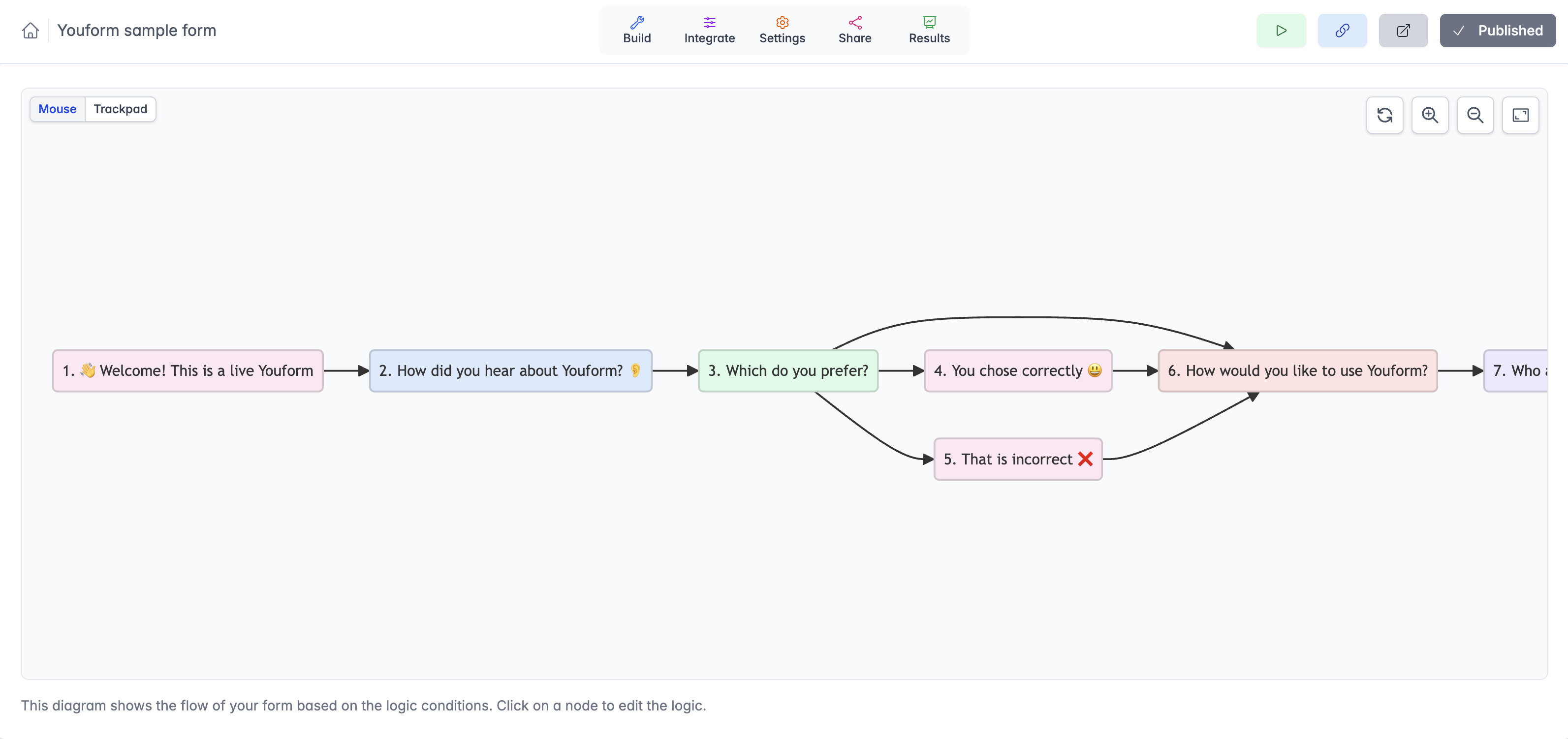
Decide the routes, then configure the questions and endings. For example, a fictional analytics consultant might review a request for an unsupported data source before offering a call. An unclear scope can receive a short follow-up question. A service the consultant does not offer needs an explanation.
Youform’s conditional logic guide explains configuring rules in the builder. Preview each route, including “not sure,” skipped optional answers, and a changed earlier answer. Set a useful default when no special condition matches.
The Free plan includes conditional logic, multiple endings, website embeds, and unlimited forms and responses within fair use. Custom branding, URL redirects, partial submissions, and advanced drop-off analytics require Pro. Check the plan details before choosing the ending or follow-up you need.
Assign a person to review responses. Youform can connect with Google Sheets and Slack, or other services through configured Zapier automation and webhooks. CRM owner assignment, deduplication, and follow-up rules depend on the workflow you configure. Connected services can have separate fees.
A submitted inquiry and a confirmed appointment are different events. If someone must review the request first, explain that review step before inviting the prospect to book. Keep a requested sales reply separate from a marketing subscription.
Review qualified conversations as well as completed forms
Compare the number of inquiries with the conversations, proposals, and customers they lead to. Record why requests needed review or could not be served. If a field repeatedly produces unclear answers, review its wording and purpose before adding another required question.
Use a consistent audience and period when comparing changes. More submissions can come with less useful context; fewer submissions can also mean the form made a relevant inquiry unnecessarily difficult. Your own follow-up records help you understand that trade-off.
Create a free Youform account and build the smallest qualification form that helps your team respond well.
Sources and review notes
Reviewed . Youform publishes this guide. The question examples and consultant scenario are suggestions created for this article; product statements are based on the linked documentation, not a new hands-on sales-workflow test.